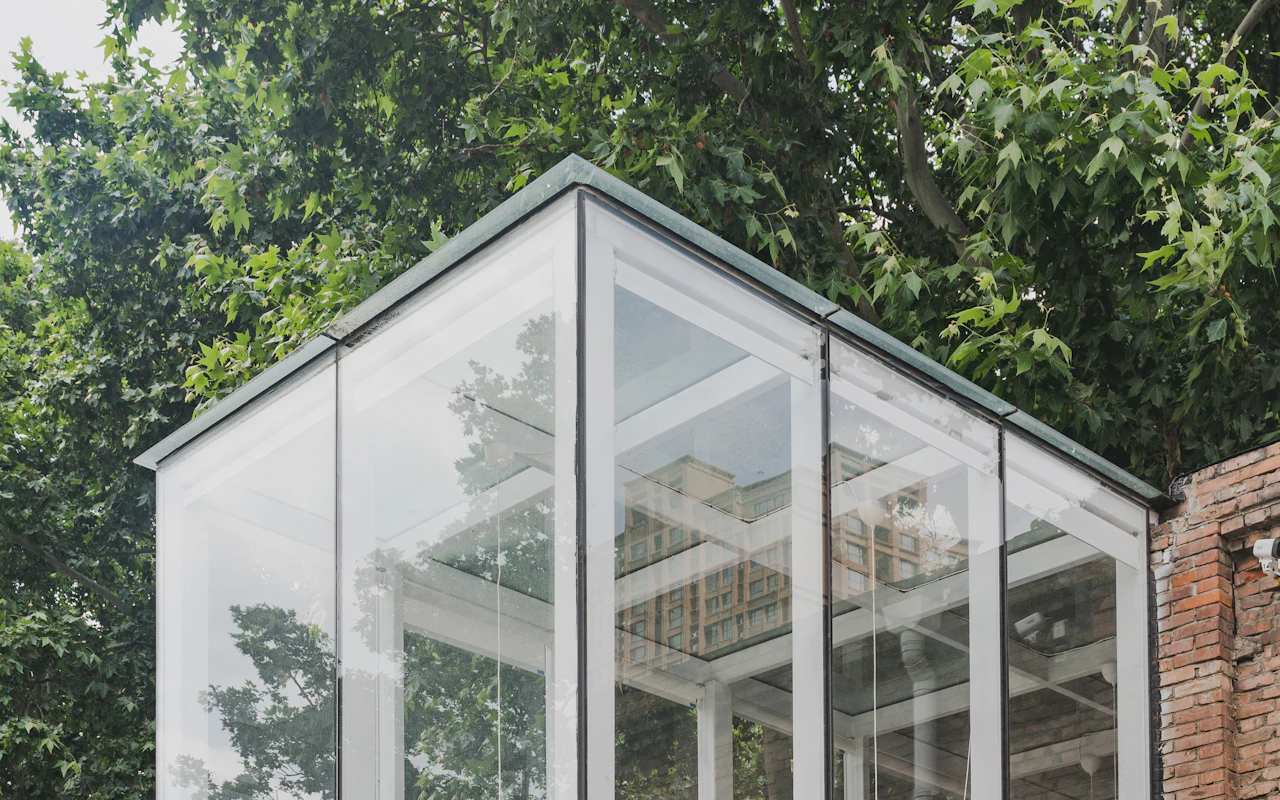
When people picture a conservatory, they usually see a sloping glass roof. So the phrase “flat roof conservatory” can sound like a contradiction. In practice it describes a room with glazed walls, or partly glazed walls, under a solid roof that is close to level, often with a glass lantern set into the middle.
It is a popular way to rethink an old conservatory, particularly on houses where a pitched roof would clash with upstairs windows. Here is how it works and what to weigh before you choose one.
What a flat roof conservatory actually is
A flat roof on a conservatory is built much like the flat roof on a modern single-storey extension. There is a timber or engineered structure, a layer of insulation, a waterproof membrane on top and a plastered ceiling underneath.
It is never perfectly level. A gentle fall is built in so rainwater runs to a gutter or outlet rather than sitting in puddles. You will not notice the slope from inside the room, but a good fitter will talk about it, because getting it right is what keeps the roof dry for years.
Flat roof or warm roof?
You may hear “warm roof” used for both pitched and flat solid roofs. It simply means the insulation sits above the structure, keeping the timbers on the warm side. A flat roof can be a warm roof, and on a conservatory it usually is.
Why people choose one
Most people come to a flat roof for the same reasons they would choose any solid roof. The room holds its heat in winter, stays shaded in summer and stops sounding like a drum when it rains.
There are a few extra reasons that are particular to flat roofs:
- Upstairs windows. A pitched roof can creep up towards a first-floor window sill. A flat roof keeps clear of it.
- A cleaner look. On a modern house, or a modern rear wall, a flat roof with a lantern can look more like an orangery than a conservatory.
- Space for a big lantern. A large, flat area is an easy place to set a glazed lantern, which brings back a lot of the light.
None of these make a flat roof right for every house. On a Victorian terrace with a pitched slate roof, a tiled pitched conservatory roof may sit more naturally, and that is a conversation to have at the survey.
The light question
This is the part people underestimate. Going from a fully glazed roof to a solid one changes the room, and it also changes the room behind it. If your kitchen or lounge borrows light through the conservatory, it will get darker.
A lantern is the usual answer. On our cost page you will see that a lantern set into a solid roof typically adds around £1,200 to £3,000, depending on its size and glazing. Roof windows are another option on some designs.
Rules and paperwork
A flat solid roof is treated the same way as any other solid roof on a conservatory. Government guidance from 2013 says a conservatory keeps its exemption from the Building Regulations only while it stays a conservatory, and that significantly reducing the glazing in the roof can take it out of that exemption.
LABC does not hedge here. Insulate and tile the roof and the conservatory forfeits its exemption; building control then needs convincing that frames, door supports and foundations will hold up. So expect a building regulations application. In Norwich, that goes to CNC Building Control or a registered private approver, and our planning and building rules page explains how it works.
Planning permission is a separate matter. Most roof changes are permitted development, the Planning Portal explains, though one that transforms the roof’s shape or appearance may need consent. In Norwich’s conservation areas, it is worth asking the council before you commit.
Rough sums for one room
Imagine a conservatory with about 12 square metres of floor, with a tired polycarbonate roof and a lounge behind it that relies on the conservatory for daylight.
A fitter surveys the frames and base and finds them sound. You choose a flat solid roof with a lantern. Using the national bands on our cost page, a medium tiled or solid roof is typically £8,000 to £12,000, with roughly £1,200 to £3,000 more for the lantern. Then add the building control charge, which may be in the firm’s price or paid by you.
That gives you a ballpark before anyone visits. It is a guide, not a quote, and the survey may change it.
Questions to ask a fitter
Before you sign anything, get clear answers on these points:
- What fall will the roof have, and where does the water go?
- What have you checked about my frames and base, and what happens if they are not strong enough?
- Who is making the building regulations application, and is the fee in your price?
- What size of lantern would bring enough light back to the room behind?
A firm that answers those comfortably is usually one that has built a few of these before. If you are in the city and want to compare options, start with our page on conservatory roof replacement Norwich and the full roof price calculator.